
Blog
What is a mortise handle – and why it might be the most considered door choice you make?

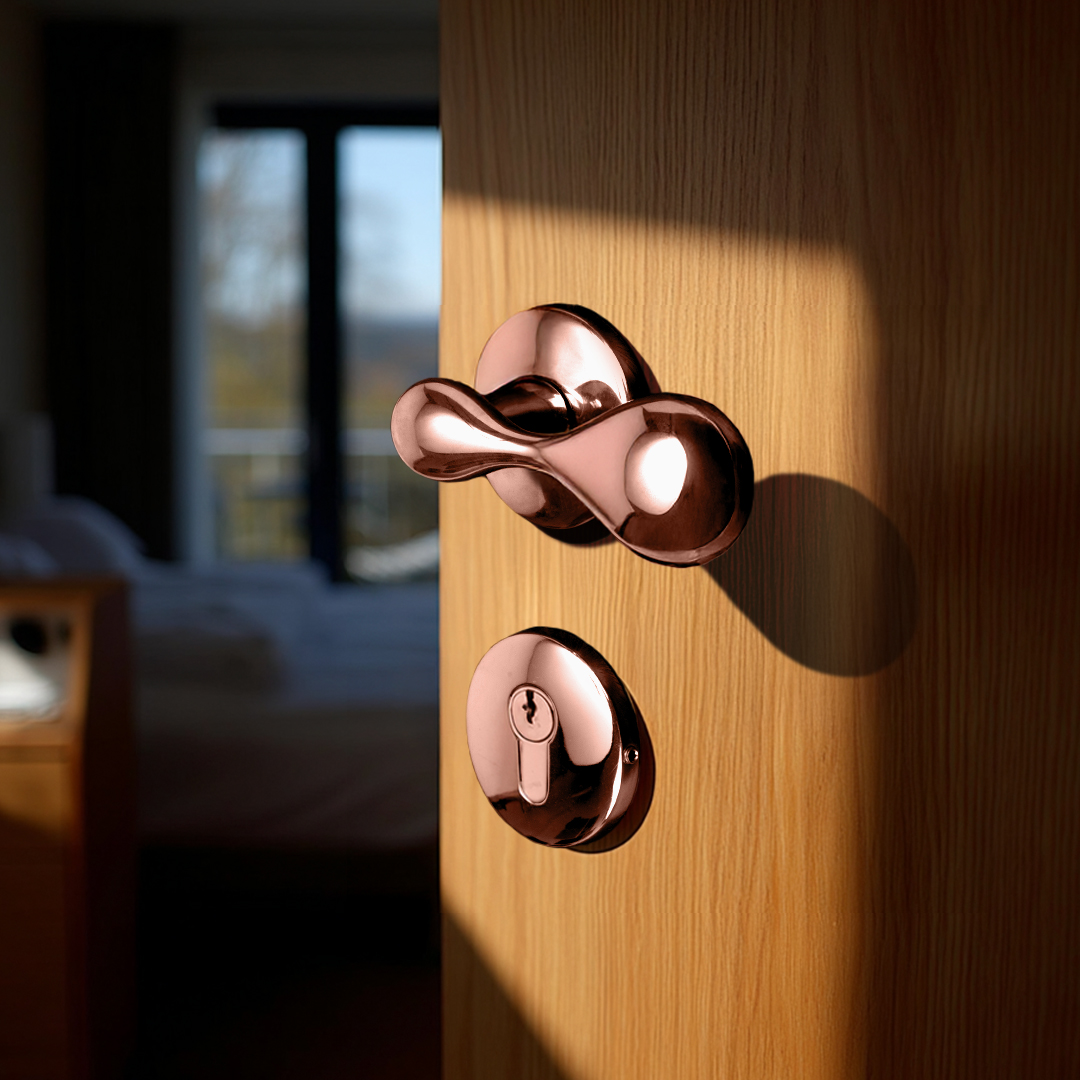
On the difference between hardware that fills a hole and hardware that completes a door.
There is a moment in almost every thoughtful renovation when the larger decisions are complete. The walls are finished. Floors are laid. And then, quietly, attention turns to the doors.
What kind of handle?
If the question is asked with intention, it quickly becomes more specific: mortise or not mortise?
And once understood, the answer tends to resolve itself.
A mortise handle, also referred to as a mortise handle in older architectural practice is not a recent innovation. It is, rather, the standard to which quality joinery has returned, consistently, across generations of considered building. The fact that it endures is argument enough.
The mechanism, first
A mortise handle is part of a door system built around a mortise lock, a mechanism recessed into the body of the door rather than mounted on its surface. The lock sits within the door. The handle engages it through a spindle that passes cleanly through the door’s thickness.
What remains visible is only what needs to be: the handle, the plate, and the quiet assurance of a mechanism that is felt rather than seen. Mortise locks have been standard in quality joinery for centuries. Their continued use is not incidental; it is evidence of enduring design.
What separates it from a latch set
The surface-mounted latch, the common lever on a round rose is designed for ease. It sits on the door rather than within it. It works, but it remains an addition.
A mortise system asks more.
A cavity is precisely cut into the door edge. The lock body is inserted. Plates — escutcheons — are aligned and fixed to the door face. The handle and mechanism become part of the door itself.
This is why doors built to last solid timber doors, hotel doors, well-crafted interiors almost always use mortise hardware. The process itself demands a level of care that discourages compromise.
The parts you see — and their role
The handle or lever
The most visible element, and the one most often touched. Its form should respond naturally to the hand balanced, intentional, and quietly expressive. At Mukul Goyal, each handle is designed as an object in its own right, not an afterthought attached to a plate.
The escutcheon — backplate or rose
The surface plate that anchors the handle visually. Its scale, proportion, and design define how the hardware reads on the door. A full backplate, the classic choice for a mortise handle design of real character, carries more presence and more visual weight than a round rose, which suits lighter, more minimal settings. Too small in either format, and the door feels incomplete. Too large, and the hardware overwhelms it. The mortise rose handle, when chosen carefully, can be the most unobtrusive and elegant option in a room that asks for restraint.
The spindle
The internal connector between handle and mechanism. In a well-engineered system, it operates as one continuous motion precise, without looseness or play.
The lock body
Hidden within the door, but central to the experience. It determines the smoothness of operation, the firmness of closure, and the long-term reliability of the system. A quality lock body is what you feel for years after installation, not something you notice at the point of purchase, but something you appreciate every time the door closes exactly as it should.
Where mortise handles are worth specifying
The main door
The entrance to a home is the first surface touched by every person who enters. A well-weighted mortise handle communicates permanence before a word is spoken. Luxury mortise door handles at the entrance in solid brass, with a backplate of genuine proportion set the register for everything that follows inside.
The study
A space that benefits from closure both physically and mentally. A solid mortise latch reinforces that transition. The act of closing a study door with a well-made handle is small, but it is not incidental.
The bedroom
Used in low light, often without visual focus. Here, weight and tactile clarity matter more than appearance. The handle should be certain in the hand heavy enough to feel deliberate, smooth enough that the mechanism never intrudes on the moment.
Statement doors
Panelled timber, lacquered finishes, or architecturally expressive doors deserve hardware that belongs to them. Mortise systems integrate in a way surface fittings cannot the hardware becomes part of the door rather than something applied to it.
On finish and material
Brass remains the most considered material choice for mortise hardware, as it is across everything we make. A brass mortise handle develops its character over time not despite use, but because of it. The living finish acquires patina through handling, becoming more itself with every year rather than less.
A polished brass mortise set against dark timber is a combination that rarely needs justification. The warmth of the metal against the depth of the grain resolves itself.
For variation in finish:
Brushed brass sits quietly in contemporary interiors present without asserting itself. Antique brass carries depth and weight, suited to rooms where the design vocabulary values materials that record time. Satin chrome and brushed nickel respond to cooler palettes marble, white lacquer, pale plaster where warmth would introduce the wrong note.
Material should respond to the room, not compete with it. The finish of a mortise handle design is not a surface detail. It is a decision about how the door will read for as long as it stands.
The Tattva approach to mortise hardware
The Tattva Art Hardware collection represents this thinking in full. Each piece in the range — from mortise handles and pull handles to escutcheons, spindles, and cabinet hardware begins with the same question: what should this object be, beyond its function?
The result is a collection of sculptural mortise handles designed in India, where craft tradition and contemporary design sensibility are not in opposition. Where the handle is not a component but an object one that earns its place on the door the way a considered piece of furniture earns its place in a room.
Tattva door handles are made in recycled brass, finished by hand, and designed to develop over time. They are not objects that are replaced. They are objects that stay.
The installation consideration
Mortise hardware requires precision. The cavity must be accurately routed into the door edge. Plates must sit correctly flush or intentionally proud of the door face. Spindle length must be calibrated to door thickness.
This is not unnecessary complexity. It is the cost of doing something properly.
A well-installed mortise set in a solid door will operate with the same smoothness in thirty years as on the day it was fitted. Surface-mounted hardware, however well made, rarely makes the same promise and rarely keeps it.
The question worth asking
Not: which handle looks best in a photograph?
But: what should the experience of entering and leaving this room feel like every day, for years?
The mortise handle is not merely a fitting. It is a decision about permanence, about the quality of daily experience, about what a door should mean in a home that has been built with care. For those who value that experience, the answer mortise tends to arrive quietly, and stay.
→ Explore the Tattva Art Hardware door collection
→ View Tattva mortise handle sets in brass and premium finishes
→ Speak with our design team for project-specific recommendations


